
Industry Solution
Powering the Digital Core: High-Reliability Transformers for Data Centers & Blockchain
Engineered for 24/7 continuous operation, optimizing PUE, and handling severe non-linear loads. GE Transformer ensures zero downtime for your critical IT infrastructure.
Critical Challenges & GE Transformer Solutions
Addressing the specific physical, electrical, and operational demands of modern data centers and crypto mining farms.
SMPS and crypto mining rigs generate severe non-linear loads, causing high THDi which leads to equipment overheating and system crashes.
Specially designed Harmonic Mitigating Transformer utilizes phase-shifting windings to cancel 3rd, 9th, and 15th harmonics, preventing core saturation and ensuring clean power.
Mining farms and supercomputing centers run at near 100% capacity year-round, increasing the risk of insulation degradation and failure.
K-13 to K-20 rated transformers with oversized cores and Class H (220°C) insulation. Low temperature rise (80°C/115°C) designs guarantee stable heat dissipation under maximum continuous loads.
Transformer no-load and load losses directly increase OPEX and the overall Power Usage Effectiveness (PUE) of the data center.
Constructed with high-permeability silicon steel or amorphous metal cores, exceeding DOE 2016 and EU Tier 2 efficiency standards to drastically reduce no-load losses.
Bitcoin mining farms are often located in remote areas with extreme weather. Traditional substation construction delays deployment and increases costs.
Tamper-proof NEMA 3R+ enclosures integrate high-voltage fusing and switching. Factory pre-assembled for true plug-and-play installation outdoors, eliminating the need for expensive indoor substations.
Recommended Products for Your Application
Explore our high-performance transformer series tailored for IT infrastructure and digital asset operations.
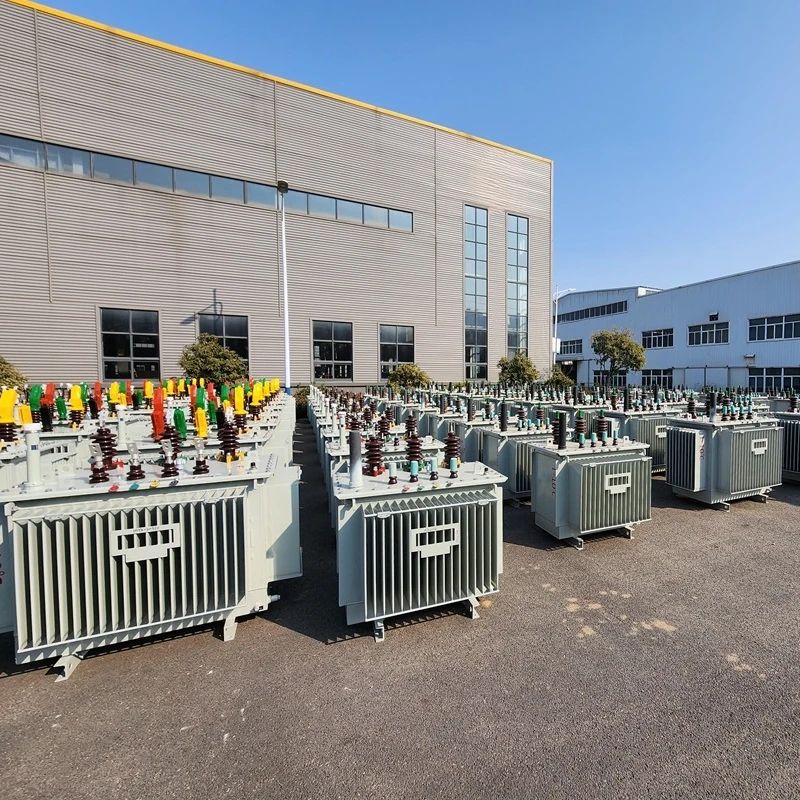
Harmonic Mitigating Transformer
√ Eliminates 3rd, 9th, 15th harmonics
√ K-Factor K-13 to K-20 rated
√ Application: Server rooms, high-density computing racks
Cast Resin Dry Type Transformer
√ Up to 35kV / F or H Class Insulation
√ Self-extinguishing (IEC 60076-11 compliant)
√ Application: Indoor data center substations, commercial buildings
Drive Isolation Transformer
√ Protects against SCR voltage spikes
√ Electrostatically shielded & Custom impedance
√ Application: Data center cooling systems, chiller VFD drives
Pad Mounted Transformer
√ Dead-front design / Tamper-proof enclosure
√ Built-in Bay-O-Net & Current Limiting Fuses
√ Application: Containerized Bitcoin mining farms, large-scale outdoor crypto facilities
Frequently Asked Questions
Q: Why do data centers specifically need a Harmonic Mitigating Transformer instead of a standard one?
Standard transformers cannot handle the high total harmonic distortion (THDi) generated by servers. A Harmonic Mitigating Transformer is structurally designed with phase-shifting windings to cancel out triplen harmonics, preventing dangerous overheating and energy waste.
Q: Can your transformers help reduce our facility's PUE (Power Usage Effectiveness)?
Yes. We utilize ultra-low-loss core materials that significantly reduce both no-load and load losses. This means less heat is generated by the transformer itself, reducing the cooling burden on your HVAC system and directly lowering your PUE.
Q: Do you offer custom enclosure dimensions to fit our existing server room layout?
Absolutely. We can customize the footprint, terminal locations, and enclosure types (NEMA 1, NEMA 3R) to perfectly align with your existing switchgear and space constraints.
Q: What is the best transformer type for an outdoor Bitcoin mining farm?
For outdoor containerized mining, Pad Mounted Transformers are the industry standard. They are fully weatherproof, tamper-resistant, and integrate internal high-voltage switching and fusing. This allows you to step down medium voltage directly outside the mining containers without the need for an expensive and time-consuming indoor substation setup.
Request a Technical Proposal
Fill out the form below. Our energy storage engineer will reply within 12 hours.
Industry Insights & Engineering Blogs
Stay updated with the latest technological advancements in power distribution for digital infrastructure.
Power Quality
How to Manage HarmonicDistortion in High-Density Crypto Mining Farms
Discover how the right transformer design canextend the lifespan of your mining rigs andprevent costly power outages.
Read MoreEnvironmental Engineering
Reducing Data Center PUE: The Role of Ultra-High Efficiency Transformers
Learn how upgrading your electrical infrastructure with ultra-low loss cores directly translates toOPEX reduction.
Read MoreGrid Integration
Deploying Pad Mounted Transformers for Containerized Bitcoin Mining Farms
A comprehensive guide on selecting multi-winding architectures and dual low-voltage inputs to streamline utility-scale solar grid...
Read More

